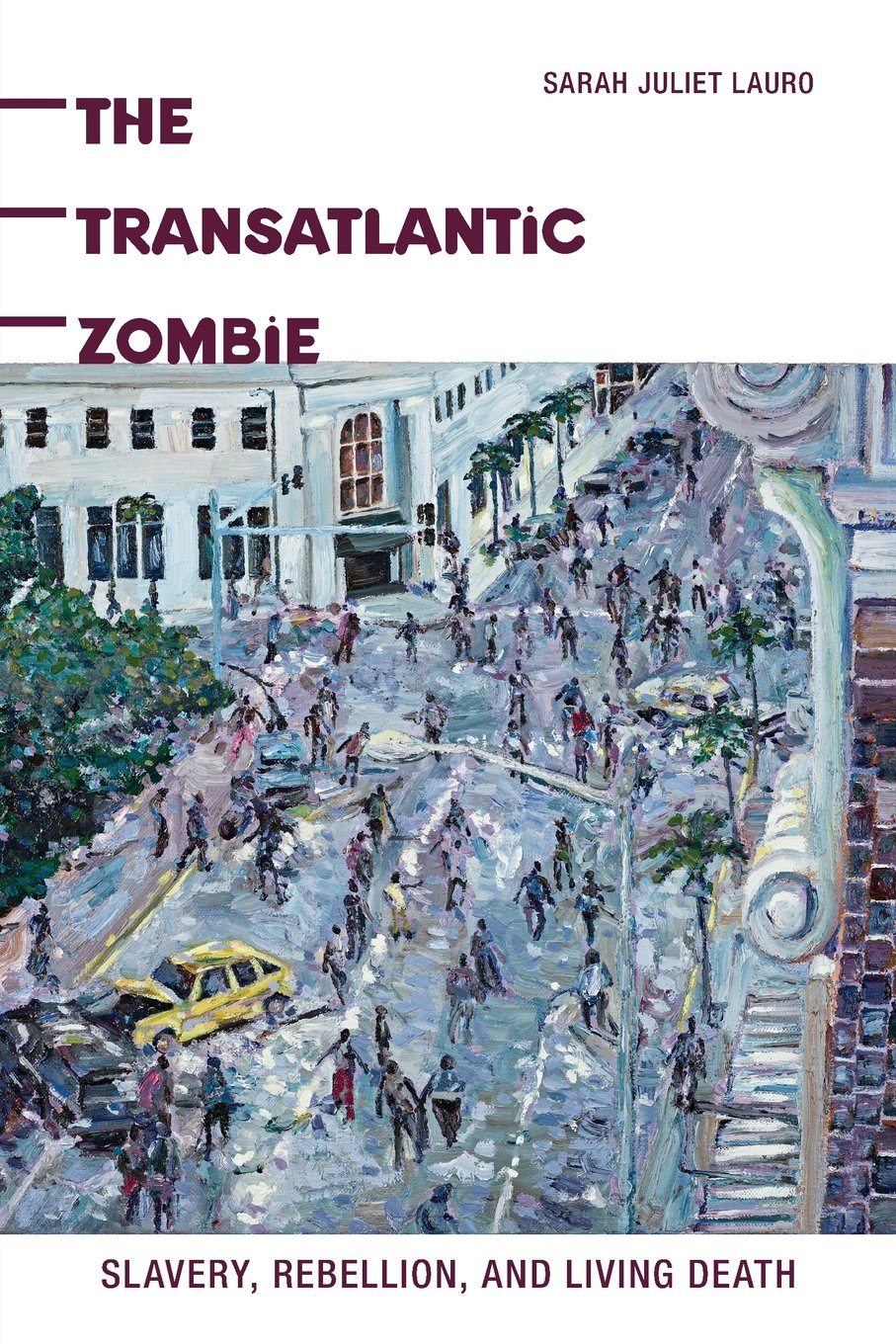
 Our most modern monster and perhaps our most American, the zombie that is so prevalent in popular culture today has its roots in African soul capture mythologies. The Transatlantic Zombie provides a more complete history of the zombie than has ever been told, explaining how the myth’s migration to the New World was facilitated by the transatlantic slave trade, and reveals the real world import of storytelling, reminding us of the power of myths and mythmaking, and the high stakes of appropriation and homage.
Beginning with an account of a probable ancestor of the zombie found in the Congolese and Angolan regions of seventeenth-century Africa and ending with a description of the way new media are used to facilitate zombie-themed events, Sarah Juliet Lauro plots the zombie’s cultural significance through Caribbean literature, Haitian folklore, and American literature, film, and the visual arts. The zombie entered US consciousness through the American occupation of Haiti, the site of an eighteenth-century slave rebellion that became a war for independence, thus making the figuration of living death inseparable from its resonances with both slavery and rebellion.
As The Transatlantic Zombie shows, the zombie is not merely a bogeyman representing the ills of modern society, but a battleground over which a cultural war has been fought between the imperial urge to absorb exotic, threatening elements, and the originary, Afro-diasporic culture’s preservation through a strategy of mythic combat.